
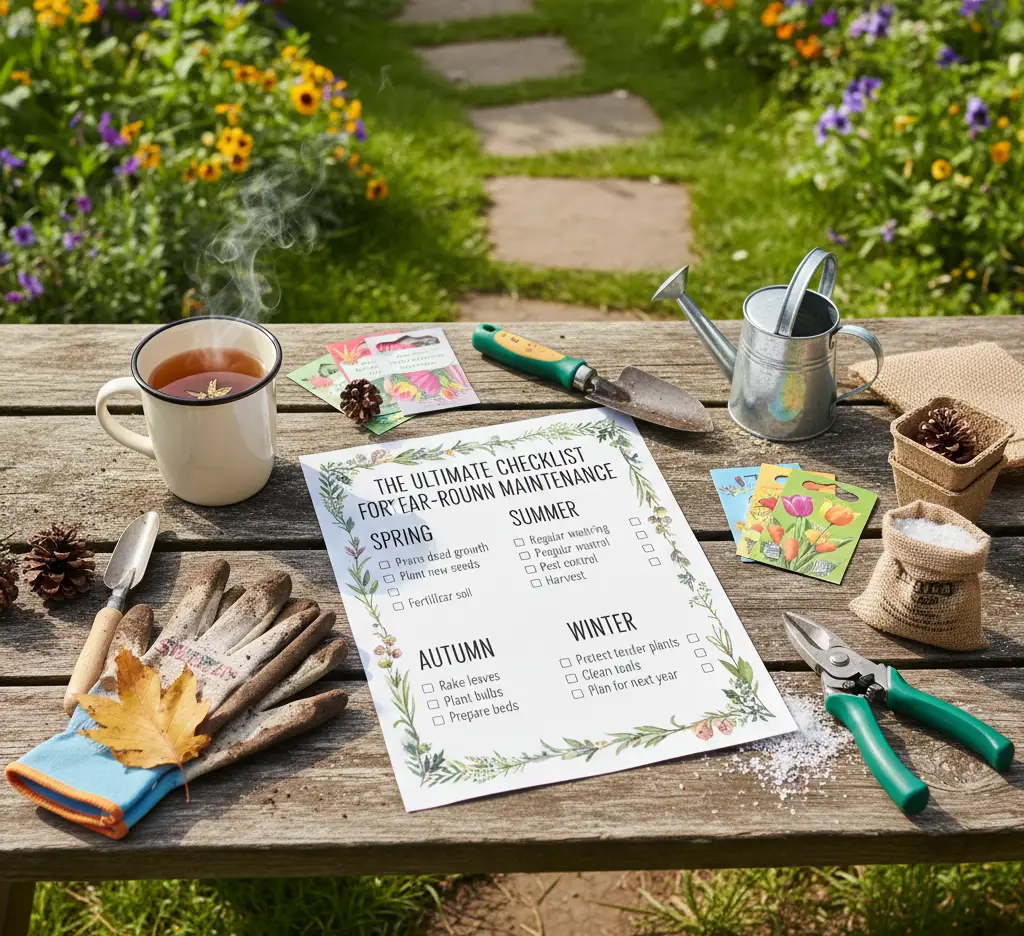
Keeping your garden looking great all year is super important if you want healthy plants and a lovely yard. By taking care of it through all the seasons, you can make sure your plants stay in top shape and your garden looks amazing. This checklist has some handy tips for each season to help you get the best results.
Summer Tasks to Keep Your Garden Flourishing
Deep Watering
In the summer, gardens look amazing but need regular watering. Deep watering twice a week is great because it gets the water down to the roots, helping them grow deeper and stronger. This makes plants tougher during dry times and keeps them healthy.
Effective Mulching
Putting straw or wood chips on the soil helps keep it moist and stops weeds. During hot months, this is super important because it stops water from evaporating and keeps the soil cool, which is just what plants need.
Deadheading Flowers
Getting rid of old blooms, or deadheading, helps new flowers grow. It makes the plant focus on blooming, so you get lots of flowers all season. Plus, it keeps your garden looking neat and tidy.
Early Weed Control
Weeds steal nutrients and water from your plants, so it’s smart to pull them out early. You might try a pre-emergent herbicide to stop them from growing. Doing this early makes garden care easier and keeps your plants from having to compete for what they need.
Vigilance Against Pests and Diseases
Summer heat can make pests and diseases spread fast. Check your garden regularly for any signs of trouble. Quick actions like using insecticidal soap or removing bad leaves can stop problems before they get big, keeping your garden healthy and strong.
By doing these things, your garden will look amazing all summer, letting you enjoy its beauty at its best.
Year-Round Maintenance
To keep your garden looking great all year, there’s a few things you should do regularly. Taking care of it often keeps it thriving and cuts down on problems. Doing stuff like keeping the soil healthy, watering right, and staying on top of pests and weeds really helps your garden stay strong and last longer.
Soil Health
Your garden’s health kicks off with the soil. If it’s dry a bit below the surface, give it some water. Once a year, mix in stuff like compost or leaf mold to boost the soil’s fertility and help plants grow better.
Watering
Watering smartly is super important. Try to give about an inch of water each week, including rain. A rain gauge can show you how much water your garden’s getting, so your plants stay perfectly hydrated.
Pest and Weed Control
Dealing with pests and weeds early makes a big difference. Check your plants often, use natural ways to get rid of pests, and pull out weeds before they steal nutrients. Mulching is great too, as it stops weeds and keeps the soil moist.
Spending a bit of time each week on these things will give you a tougher, happier garden.
Tools and Equipment for Garden Maintenance
Equipping your garden shed with the right tools makes taking care of your garden so much easier and quicker.
Essential Tools
– Gloves: Keep your hands safe with tough gloves. Just wash them often and store them somewhere dry.
– Trowel: Great for digging small holes. Clean it after each use and give it a bit of oil now and then to stop rust.
– Pruners: Perfect for trimming plants. Keep them sharp and clean them regularly.
– Rake: Super for gathering leaves. Make sure its tines are straight and rust-free.
– Watering Can: Ideal for watering delicate plants. Empty it after using to avoid build-up.
– Wheelbarrow: Handy for moving heavy stuff. Check the tire pressure and oil the wheel to keep it in shape.
– Garden Fork: Good for loosening soil. Keep it clean and dry to prevent rusting.
Organizing Tools
Organize your tools to save time and effort. Pop up some hooks or shelves in your shed or garage to keep things neat. Label where everything goes so you can grab what you need fast. A pegboard is great for hanging tools up, which helps them last longer. Check your tools regularly and fix or replace them when needed. Doing this makes gardening easier and lets you enjoy your plants more.
Eco-Friendly Practices in Garden Maintenance
Gardening sustainably is awesome for both your plants and the planet. Making simple green choices boosts your garden’s health and helps the environment too.
Composting and Waste Reduction
Turn kitchen scraps and garden waste into compost to make your soil better without chemical stuff. Just toss in veggie peels, coffee grounds, and leaves to your compost bin for some natural, nutrient-rich soil.
Using Organic Materials
Go for organic fertilizers like bone meal and fish emulsion to feed your plants without the nasty chemicals. Use things like neem oil or homemade sprays to deal with pests while keeping helpful bugs safe.
Promoting Biodiversity
Make your garden a cool spot for wildlife by putting in a birdbath or a small pond. Plant native flowers and shrubs to bring in bees and butterflies, and create a lively, eco-friendly space.
Try these ideas out, and you’ll have a thriving garden that’s great for the planet!
Troubleshooting Common Garden Issues
Gardening can be tricky, but knowing the common issues makes them easier to tackle. Things like pests, diseases, and nutrient shortages can be sorted out with the right tricks.
Pests
Aphids, slugs, and caterpillars are often a gardener’s headache. Neem oil works well on aphids, or you can let ladybugs loose to naturally reduce them. To keep slugs away, try copper barriers or beer traps. For caterpillars, picking them off by hand or using something called Bt can do the trick.
Diseases
Problems like powdery mildew, root rot, and leaf spot can cause chaos if ignored. To fight powdery mildew, get more air moving around your plants and try sulfur treatments. Root rot usually means bad drainage, so make sure water drains well and don’t overwater. For leaf spot, take off the bad leaves and maybe use a copper-based fungicide.
Nutrient Deficiencies
If leaves go yellow, it might mean a lack of nitrogen or iron; a soil test can confirm this. Wilting could show that plants need more water or nutrients, so check the soil’s moisture and tweak your watering. Purple leaves might mean too much phosphorus, so a balanced fertilizer can help. Quick fixes like these keep your garden looking great.
Adapting the Checklist for Different Climates
Gardening success really hinges on tweaking your tasks to match the weather. When you adjust your to-do list for different climates, your plants can thrive all year, no sweat.
Cool Climates
If you live somewhere chilly, keeping plants safe from frost is key. Try using frost cloths or covers to fend off surprise cold snaps. Go for tough plants like pansies and kale that can handle frost. Mulching keeps roots warm and soil temps steady.
Temperate Climates
In temperate areas, it’s all about getting the watering right and taking care of the soil. Check the soil’s pH often and mix in organic stuff to keep it healthy. Mulch helps lock in moisture and even out temps. Give your plants a trim when the seasons change to get them ready for what’s next.
Hot and Dry Climates
Water’s a big deal in hot, dry places. Drip irrigation is great for saving water while keeping plants hydrated. Pick drought-tough plants like succulents and lavender that love the heat. Mulch cuts down on water loss, so the soil stays moist longer. By tweaking your gardening to suit the climate, your garden can stay lively and strong.
Checklist Benefits for Long-Term Gardening Success
Keeping up with garden work all year helps your plants stay healthy and beautiful. By ticking off tasks on your gardening list, your garden stays lively and you stop problems before they get big. Try these tips and you’ll have a lovely, well-kept garden for many years.